
Laser Assisted Flap Surgery | Advanced Gum Disease Treatment in Indiranagar, Bangalore
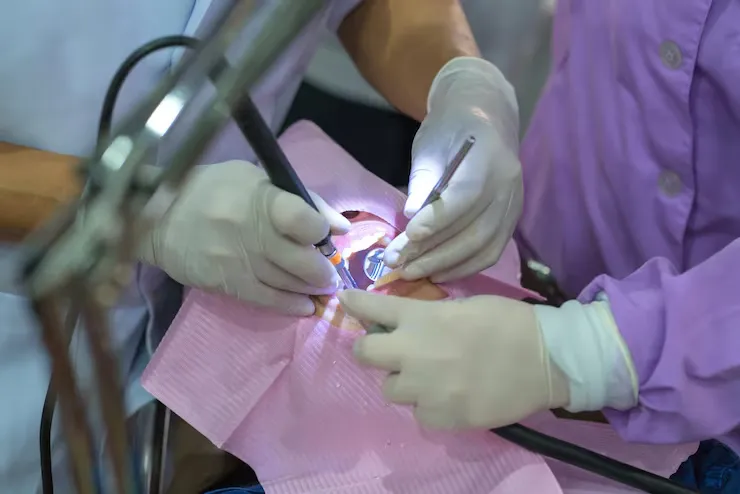
Gum disease slowly destroys the bone supporting your teeth, and deep pockets of 6 mm or more cannot be cleaned fully without lifting the gum. Flap surgery does this by gently raising the gum to expose the roots and bone, allowing thorough cleaning before stitching the gum back at a shallower, healthier level.
Laser‑assisted flap surgery adds an Er:YAG Fotona LightWalker step after mechanical cleaning to decontaminate root surfaces and bone defects, disrupting biofilm in areas instruments cannot reach and creating a cleaner field for faster, better healing.
At DSC, this procedure is performed by Dr. Balasubramanya K V (MDS Periodontics), a LANAP Certified Practitioner and Fotona LightWalker Certified Operator with postgraduate laser dentistry training from the University of Vienna.
What is laser-assisted flap surgery?
It is a gum surgery in which the gum is gently lifted to clean deep pockets and bone defects, and an additional dental laser step is used to disinfect the area further before the gum is stitched back.
How is it different from conventional flap surgery?
| Aspect | Conventional Flap | Laser-assisted Flap |
|---|---|---|
| Root Surface Cleaning | Mechanical instruments only | Mechanical cleaning plus Er:YAG laser decontamination of the root surface |
| Bone Defect Cleaning | Instruments and irrigation | Instruments plus laser disruption of biofilm in bone defects |
| Residual Bacteria | Some bacteria remain after instrumentation. | Bacterial load significantly reduced; laser reaches tubules and micro-crevices. |
| Haemostasis | Gauze and pressure | Laser helps cauterise and control bleeding for a clearer field |
| Healing Environment | Standard post-surgical | Lower bacterial load at closure, supporting better healing conditions |
| Photobiomodulation (LLLT) | Not used | Nd:YAG low-level settings may be used after closure to support healing and comfort |
| Post-operative Discomfort | Typical surgical recovery | Often described as milder due to the laser's bio-stimulatory and anti-inflammatory effects. |
Who is laser-assisted flap surgery for?
Laser-assisted flap surgery is typically recommended when:

- You have Stage 3 or Stage 4 periodontitis with pockets of 6 mm or more that have not fully responded to scaling and root planing.
- There are complex vertical (intrabony) bone defects where thorough decontamination before bone grafting improves regeneration outcomes.
- Heavy subgingival calculus is present in areas difficult to access with closed cleaning, especially furcations of molars.
- Previous conventional flap surgery has left some deep or inflamed sites that need a more thorough approach.
- Systemic risk factors such as uncontrolled diabetes or smoking make it especially important to minimise bacterial contamination during healing.
- You prefer a traditional surgical approach (with access and sutures) but want the added decontamination and healing support that the laser provides.
The procedure – step by step

Assessment and planning

Pre‑surgical preparation
Deep cleaning is completed, and chlorhexidine mouthwash is used to reduce inflammation.

Local anaesthesia
One quadrant is fully numbed, so the surgery is comfortable.

Flap incision and elevation
Small cuts are made, and the gum is gently lifted to expose roots and bone.

Mechanical root cleaning
All plaque and calculus are removed from the exposed root surfaces under direct vision.

Laser decontamination
The Er:YAG laser is passed over roots and bone to disrupt remaining bacterial biofilm.

Bone defect treatment
Where needed, bone graft and membrane (GTR) are placed into suitable vertical defects.

Flap closure
The gum is repositioned at a shallower level and secured with sutures, sometimes with a dressing.

Photobiomodulation
Low‑level Nd:YAG laser is applied over the sutured area to support healing and comfort.
- Rest at home on the day, use an ice pack, eat cold soft foods, and start painkillers before the numbness wears off.
- Days 1–3: expect mild swelling, stay on a soft diet, avoid hot/spicy foods and smoking, and rinse very gently with chlorhexidine from Day 2.
- Days 4–7: continue mouthwash, avoid brushing on the surgical site, no strenuous exercise, and most people return to desk work by Day 3–4.
- Day 7–10: stitches are removed, healing is checked, and gentle brushing with a soft brush resumes.
- Weeks 3–6: slowly return to a normal diet and full cleaning, and attend your review visit.
- Long term: plan regular 3–6‑monthly periodontal maintenance; good home care, no smoking, and controlled diabetes are key to keeping results stable.
Recovery and aftercare
Why choose DSC for laser assisted flap surgery?

Specialist led periodontal surgery
Your surgery is planned and performed by a periodontist with advanced training in both conventional periodontal surgery and laser protocols, so access surgery, debridement, laser use, and regeneration are integrated into a single, coherent plan.

Fotona LightWalker dual wavelength technology
DSC uses the Fotona LightWalker Er:YAG + Nd:YAG system, designed to decontaminate roots and bone while supporting healing through photobiomodulation, which can lead to less bleeding, cleaner pockets, and a more comfortable recovery.
Evidence based laser protocols, not gimmicks
Laser is used as an adjunct to thorough mechanical cleaning and guided tissue regeneration, where indicated, following research showing that laser-assisted periodontal therapy can reduce bacterial load, pocket depth, and postoperative discomfort.
Focus on long term stability, not just surgery day
From pre-surgical debridement and risk-factor control (smoking, diabetes) to structured 3-monthly maintenance, DSC’s protocol is built around keeping pockets stable and teeth retainable for the long term, not just achieving a one-time reduction.
Laser-Assisted Flap Surgery Cost in Bangalore
Laser-assisted flap surgery is priced per quadrant, one quarter of the mouth per appointment. Typically ranges from ₹8,000 to ₹15,000 per quadrant
All costs are confirmed in writing before any surgical appointment. No hidden charges.
Frequently Asked Questions
Why use a laser during flap surgery?
Instruments clean roots very thoroughly but cannot reach bacteria hiding in dentinal tubules and tiny bone irregularities. Adding laser decontamination reduces residual bacteria at closure, which is especially important when placing bone grafts or in higher-risk patients, such as smokers and those with diabetes.
Is laser assisted flap surgery more painful?
No. Many patients report milder discomfort than with conventional flap surgery because the Er:YAG laser is less mechanically traumatic, and the Nd:YAG photobiomodulation step at the end helps reduce post‑operative inflammation and pain.
Can I have LANAP instead of laser assisted flap surgery?
Often yes. LANAP treats gum disease from inside the pocket with the Nd:YAG laser and avoids incisions and sutures, making it suitable for many Stage 2–4 periodontitis cases. Laser-assisted flap surgery is reserved for sites that require direct access or bone grafting; your periodontist will recommend which option best fits your case.
What if I skip maintenance after surgery?
Gum disease will return. Bacteria repopulate pockets within weeks, and without 3‑monthly professional maintenance, pocket depths increase again, and bone loss resumes, undoing the surgical benefit over time.
Will my teeth look longer after flap surgery?
They may look slightly longer where the gum is repositioned lower on the root to create a shallower, healthier pocket. In most patients, this change is subtle and is discussed in advance if aesthetics are a concern.