
Dental Braces & Aligners in Bangalore | Orthodontic Treatment at DSC, Indiranagar
Straight teeth are not just cosmetic. When teeth line up properly, they are easier to clean, wear more evenly, and are less likely to chip or crack, while crowding and an uneven bite trap plaque and overload certain teeth.
At DSC, both adults and teenagers can have effective orthodontic treatment with clear aligners instead of visible metal braces, and you see a digital simulation of your expected result before you commit.
Orthodontic treatments are planned and overseen by Dr. Ramya Balasubramanya, who is an MDS Prosthodontist and Certified Invisalign Provider. This ensures that tooth movement is always coordinated with your bite, long-term dental health, and any upcoming cosmetic procedures.
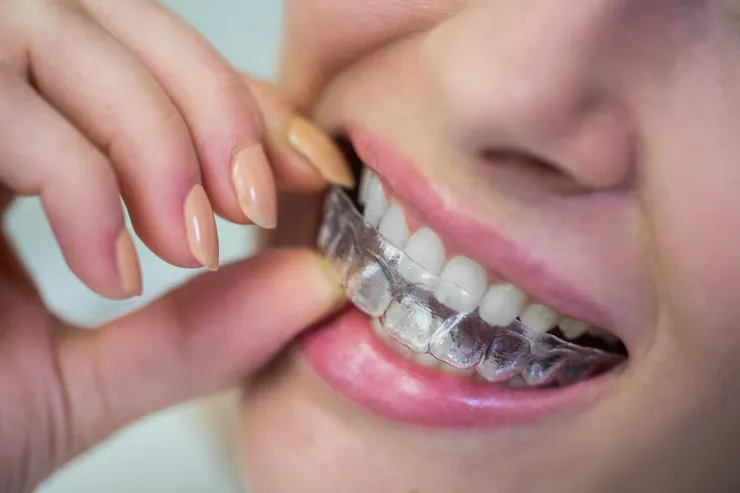
What problems can orthodontic treatment correct?
Orthodontics at DSC can address:
- Crowding: Overlapping or rotated teeth due to a lack of space.
- Spacing: Gaps between teeth, including a midline gap.
- Excess overjet: Upper front teeth sticking out too far.
- Deep bite: Upper front teeth covering the lower teeth too much vertically.
- Open bite: Front teeth not touching when back teeth are together.
- Crossbite: Upper teeth biting inside lower teeth on one or both sides.
- Crooked front teeth that affect confidence and smile aesthetics.
- Pre‑implant orthodontics: Moving teeth to create an ideal space for implants.
- Pre‑veneer orthodontics: Aligning teeth first so veneers can be done more conservatively.
Treatment options at DSC
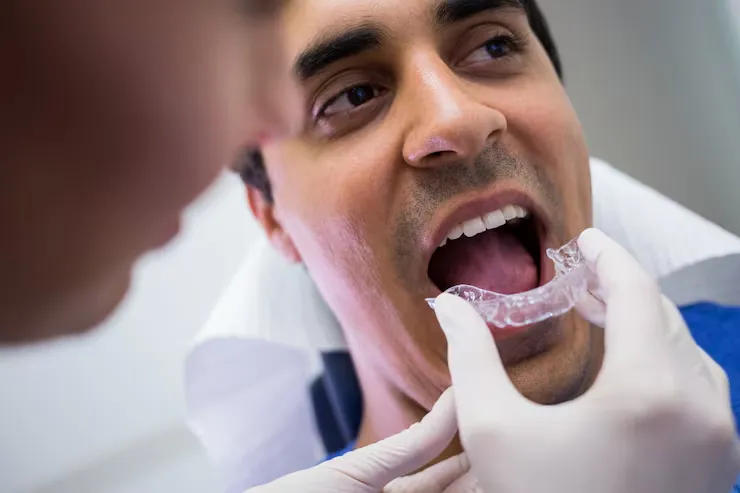
Invisalign – primary option for adults
Invisalign uses a sequence of custom clear plastic aligners that gently move teeth step by step. Each set is worn for about 1–2 weeks, then replaced with the next until the teeth reach their planned final positions. Aligners are almost invisible, removable for eating and brushing, and planned using a ClinCheck digital simulation that shows how teeth will move at each stage before you start.
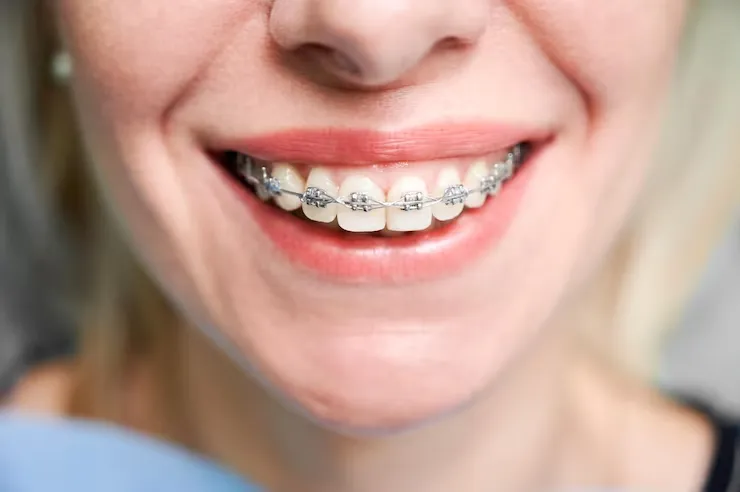
Fixed braces – for complex movements
When tooth movements are large, involve significant rotations or vertical changes, or when extractions are needed, fixed braces may be the more predictable option. Modern ceramic (tooth‑coloured) brackets make treatment more discreet. At DSC, fixed braces are used when they are clearly the best tool for the job, not just as a cheaper alternative.

Retention – after any orthodontic treatment
Teeth have a natural tendency to drift back toward their original positions if not held in place with retainers. After treatment, DSC provides both a removable Essix retainer (worn nightly) and a fixed lingual retainer bonded to the back of the front teeth; both are important, and neither is optional if you want to maintain the result.
Recovery & aftercare

Starting clear aligners
- Wear aligners 20–22 hours a day, removing only for eating, drinking anything other than water, and brushing.
- Expect mild pressure or tightness for 2–3 days with each new set — this is tooth movement starting and usually settles quickly.
- A slight lisp is common in the first week and usually resolves as the tongue adapts.
- Clean aligners with a soft brush and cool water only; avoid toothpaste and hot water to prevent scratching or warping.
- If an aligner cracks or is lost, contact DSC promptly; gaps in wear can delay or disrupt treatment.

Fixed braces – daily care
- Avoid hard, sticky, and very crunchy foods for the entire treatment period, as they can bend wires or break brackets.
- Brush carefully around brackets and along the gumline after every meal; use interdental brushes and/or a water flosser for better plaque control.
- White‑spot lesions (early enamel damage) can appear around brackets if plaque is not removed; they are largely preventable with good hygiene and fluoride support.
- Attend adjustments every 4–8 weeks as scheduled; missed visits lengthen overall treatment time.

Retention phase
- Wear the removable Essix retainer every night, indefinitely. Stopping after “a year or two” is what commonly leads to relapse.
- Keep the fixed lingual retainer clean by flossing or using interdental brushes underneath it daily.
- If a retainer breaks, bends, or is lost, contact DSC within days; teeth can move quickly, and a delayed replacement may no longer fit.
Braces and Aligners Cost in Bangalore
Fees depend on the system used (Invisalign, Clear Path, or fixed braces), the complexity of tooth movement, and the expected treatment duration.
| Treatment | Indicative Price (₹) |
|---|---|
| Invisalign (full treatment — mild to moderate) | ₹1,20,000 – ₹2,20,000 |
| Invisalign Lite (minor corrections) | ₹60,000 – ₹1,00,000 |
| Clear Path Aligners | ₹80,000 – ₹1,50,000 |
| Metal Braces | ₹20,000 – ₹40,000 |
| Ceramic Braces | ₹35,000 – ₹60,000 |
| Retainers (removable) | ₹3,000 – ₹6,000 per arch |
You receive a full written treatment plan with itemised costs once your orthodontic records and digital analysis are complete.
Frequently Asked Questions
Is orthodontic treatment only for children and teenagers?
No. Many adults have braces or clear aligners to correct crowding, gaps, or bite problems, often with timelines similar to teenage treatment.
How long will my treatment take?
Most mild spacing or crowding cases finish in about 6–10 months, moderate cases in 12–18 months, and more complex movements can take 18–24 months.
Are clear aligners as effective as braces?
For most mild-to-moderate adult cases, yes, provided you wear them 20–22 hours a day; very complex movements may still be better treated with fixed braces.
How many hours a day do I need to wear aligners?
Aligners must be worn 20–22 hours per day, removed only for eating, drinking anything other than water, and brushing or flossing.
Will treatment be painful?
You can expect mild pressure or soreness for a few days after starting aligners or after brace adjustments, which usually settles quickly and is manageable with over‑the‑counter pain relief.
Can I eat normally with clear aligners?
Yes. You remove aligners to eat, so there are no food restrictions, but you must brush before putting them back in to avoid staining and decay.
Do I still need to see my dentist during orthodontic treatment?
Yes. Regular checkups and cleanings are essential for monitoring the gums, enamel, and any early signs of decay around aligners or brackets.
Why do I need retainers after treatment?
Teeth naturally tend to drift back toward their original positions. Wearing retainers as instructed is the only way to keep your new alignment stable long‑term.
How long do I have to wear retainers?
Long term. Nightly wear is recommended indefinitely because teeth can continue to move slowly throughout life if they are not held in place.