
The Effects Of Periodontal Disease In Children
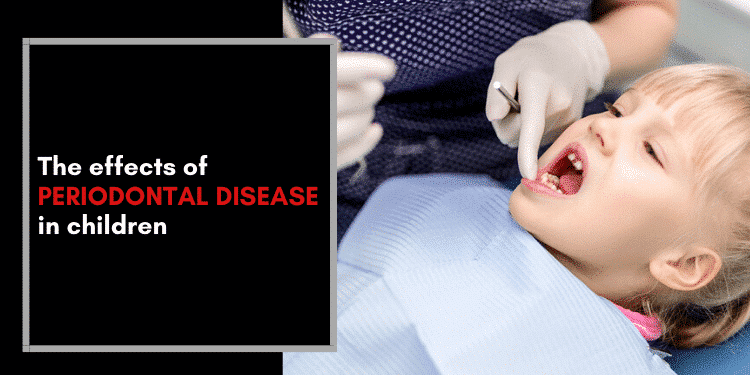
Periodontal disease not only affects adults but also is common among children and teenagers. According to a survey conducted for WHO in India along with 4 other countries. Periodontitis was observed by age 15; and at 17 years, 10% of Indian boys were known to suffer from it. The underlying cause of the disease was the accumulation of calculus, plaque, and debris rather than gender, economic status or nutrition. Erosion in 6–16-year-olds is often observed due to the high consumption of fizzy drinks.
How does periodontal (gum) disease occur?
Bacteria and food debris accumulate on the teeth and forms a film called plaque this plaque further hardens to form tartar. Ultimately affecting the gums causing them to swell and redden. As the condition continues to worsen, teeth start to loosen due to the damage caused by the soft tissue. There are many other risks associated with periodontal disease.The three main types of periodontal diseases occur in children are as follows:
Gingivitis- The gums tend to swell, turn red and are prone to bleeding. Left untreated it eventually leads to a more serious form of the disease. Aggressive Periodontitis – An advanced form of gingivitis that targets the molars and incisors, leading to bone loss in the mouth. This is a serious condition as bone loss results in loose teeth. Generalized Aggressive Periodontitis: Start with the inflammation of the gums due to excessive plaque. Eventually, this can result in gum and tooth loss. Symptoms of Periodontitis- Onset symptoms include puffiness and swollen gums,
- Bleeding of gums while brushing.
- Chronic bad breath even after brushing or flossing.
- Gums may develop pockets around the plaque
- Pus between teeth
- Sensitive Teeth
- Loose teeth