
Gummy Smile – Causes, Diagnosis and Correction in Indiranagar, Bangalore
A “gummy smile” is a common cosmetic dentistry concern in which too much upper gum shows when you smile, making the teeth look short, or the smile look too “pink”. Many people feel self‑conscious about this but never ask for help, assuming nothing can be done, when in fact most gummy smiles can be improved with modern dental treatments.
At Dental Solutions Clinic in Indiranagar, Bangalore, Dr. Balasubramanya K V, MDS in Periodontics, LANAP Certified Practitioner, and Fotona LightWalker Certified Operator, evaluates and treats gummy smiles through laser gingivectomy and crown lengthening surgery. Alongside him, Dr. Ramya Balasubramanya, MDS in Prosthodontics, BDS Gold Medallist, and Certified Digital Smile Design Practitioner, designs the aesthetic outcome using the DSD protocol. She restores teeth to their proper length after gum-line correction, especially when veneers or crowns are needed. Usually, a single Fotona LightWalker laser gingivectomy session suffices.

What Is a Gummy Smile?
A gummy smile (also called excessive gum display) means you show more than about 3–4 mm of upper gum when you smile naturally. Research on smile attractiveness suggests a thin strip of gum (0–3 mm) looks most pleasing, 4 mm is borderline, and 5 mm or more is usually seen as too much.
What Causes a Gummy Smile?
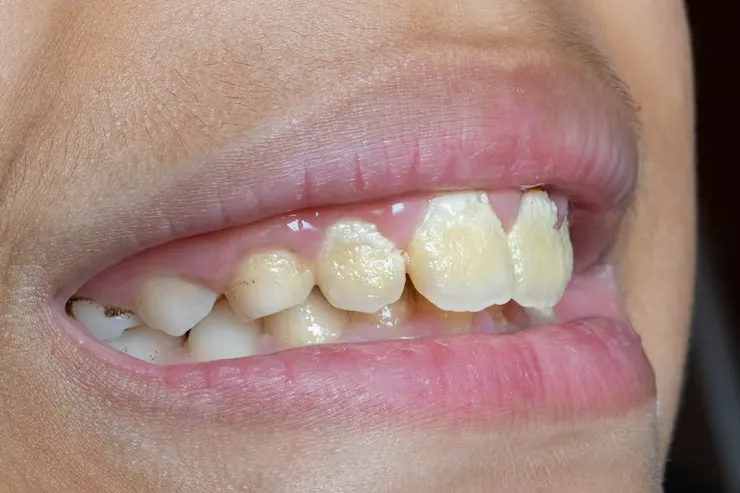
Extra Gum Covering Normal Teeth (Most Common)
In many people, the teeth are normal in size, but the gums never moved up to their ideal position during eruption, so too much gum still covers the teeth. The result: teeth look short and square, and there is a thick band of gum in the smile line.
Laser gingivectomy or crown lengthening exposes the proper amount of tooth without cutting into the tooth itself, often giving a dramatic improvement in a single visit.

Upper Jaw Positioned Too Low (Skeletal Gummy Smile)
In some patients, the upper jaw has grown longer vertically, so the bone, teeth, and gums sit lower relative to the upper lip. Even if tooth size and gum position are normal, excess gum will still be visible.
This skeletal pattern cannot be fixed with a laser alone; definitive correction usually needs orthognathic (jaw) surgery.

Upper Lip Lifts Too High (Hyperactive Lip)
Here, the teeth and gums are essentially normal, but the muscles that lift the upper lip pull it higher than average when you smile. This extra lip movement exposes more gum.
Treatment options include botulinum toxin (Dental Botox) injections into the upper lip elevator muscles to gently reduce lip elevation, or, in selected cases, more permanent lip-repositioning surgery.
Short Looking Teeth and Too Much Gum
Sometimes the visible part of the tooth is genuinely short, and the gum sits too low. The smile then shows a lot of pink and not much white.
Treatment options include crown lengthening surgery, which removes excess gum and carefully reshapes a small amount of bone where needed to set the gum line at a healthy, stable position. After healing, porcelain veneers may be added to refine shape and length and complete the smile design.

Worn Teeth with Overgrown Gums
Grinding or clenching can shorten teeth over time, while gum tissue may remain in place or thicken. This creates a combined problem of short teeth plus excess gum show.
Effective treatment often involves rebuilding the worn tooth length as part of a full-mouth rehabilitation, combined with gum contouring or crown lengthening to reposition the gum line.
How We Diagnose Gummy Smile at Dental Solutions Clinic
Your assessment usually includes:

- Measuring gum show: We measure how much gum shows above your upper front teeth when you smile and how far the upper lip moves.
- Checking tooth length: We compare what we see in your mouth with X‑rays to see whether teeth are normal in length but hidden by gum, or genuinely short.
- 3D bone assessment (when needed): For planned surgical gum corrections, CBCT scans help us position the gum safely above the bone so long‑term health is maintained.
- Lip movement analysis: We evaluate whether an overactive upper lip is contributing to the gummy appearance.
- Digital Smile Design (DSD): We use photos and digital planning to design the ideal tooth length and gum line for your face and lips, and show you an expected result before any procedure.
Treatment Options for Gummy Smile

For cases where there is simply too much gum covering normal‑length teeth, we use the Fotona LightWalker laser to gently sculpt the gum line into a more ideal position. This visit usually takes 20–45 minutes, requires only numbing gel or local anaesthetic, has little bleeding, no stitches, and heals in about 1–2 weeks. The improvement in tooth length and smile balance is visible immediately after the procedure.

When the gum sits too close to the supporting bone, laser alone is not enough. In these cases, Dr. Balasubramanya performs crown lengthening: lifting the gum, gently reshaping the bone to the correct level, and then suturing the gum back. After 4–6 weeks of healing, veneers or crowns can be placed if needed to complete the aesthetic plan.

Dental Botox for Hyperactive Lip
For patients with a hyperactive upper lip and otherwise normal gums and teeth, small doses of Dental Botox can reduce lip lift. This brings gum show into a more ideal range without surgery and typically lasts 4–6 months before needing a top‑up.

When the gum position is corrected but you also want to refine tooth shape, length, or colour, porcelain veneers are often the finishing step. Dr. Ramya plans veneers as part of your DSD smile design so that gum reshaping and tooth restoration work together to give a natural‑looking, proportional smile.