
Missing Teeth — Causes, Consequences & Replacement Options in Bangalore
A missing tooth refers to the partial or complete absence of one or more permanent teeth. It creates a visible gap as well as an unseen structural issue: once a tooth is lost, the alveolar bone, the jawbone supporting the teeth, begins to resorb. This process gradually affects neighbouring and opposing teeth, the bite, and, in cases of multiple missing teeth, the facial profile.
Tooth loss isn’t unavoidable with age. Most severe causes of decay and gum disease can be prevented through timely treatment. However, losing a tooth makes the decision on how and when to replace it a crucial choice for maintaining long-term dental health. Waiting too long can limit options, making treatments more complex and expensive.
At Dental Solutions Clinic in Indiranagar, Bangalore, missing teeth are managed by our Specialist Prosthodontist & Implantologist, Dr. Ramya Balasubramanya, who designs and fits prosthetic restorations, including crowns, bridges, full-arch prostheses, and conventional bridges and dentures when implants are not indicated. Every missing tooth case begins with a CBCT (3D) assessment to measure bone volume and plan the most appropriate replacement pathway for your anatomy, health status, and long-term goals.
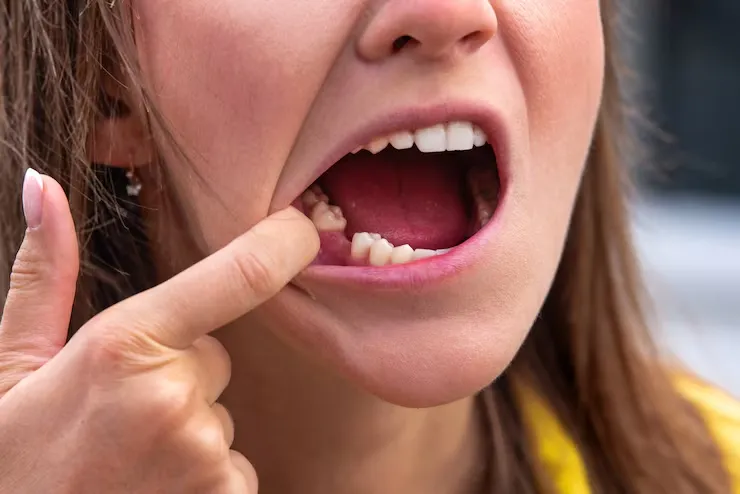
Signs of Missing Teeth
A missing tooth is usually obvious, but secondary effects develop silently over months and years. Seek assessment if you notice:
- A visible gap in the dental arch from a tooth that has been lost or extracted.
- Adjacent teeth are tilting toward the gap, suggesting the early stages of tooth drift.
- The opposing tooth appears longer or drops toward the space (over-eruption).
- A change in your bite, your teeth meet differently, or your jaw shifts when you close.
- Bone and gum shrinkage at the extraction site, the ridge feels or looks flatter over time.
- Difficulty chewing foods that were previously comfortable, especially on the side with the gap.
- Speech issues, particularly if front teeth are missing; sounds such as /f/, /v/, and /s/ rely on tooth contact.
- Facial changes, such as a sunken or shortened lower face, where multiple back teeth and bone have been lost.
- Jaw joint discomfort, clicking, or new tension that appeared after losing a tooth.
- Congenitally absent teeth (hypodontia) — when a permanent tooth never appears, and X-rays confirm that no tooth bud is present.
Main Causes of Missing Teeth
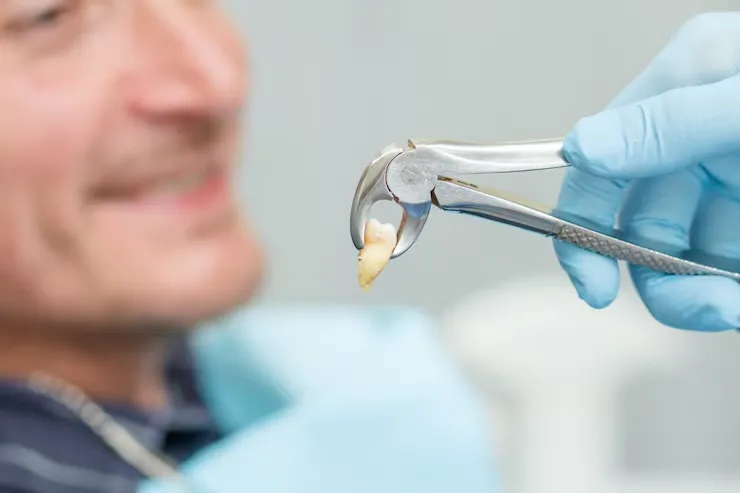
Tooth Extraction — Decay or Periodontal Disease
Advanced decay or severe periodontal disease are the most common reasons for tooth extraction in adults. When a tooth is destroyed beyond restoration, or bone loss around it exceeds what can be stabilised, extraction becomes necessary to protect overall oral health. The decision to remove a tooth should be followed closely by a discussion of replacement options and, where appropriate, socket preservation to preserve future implant options.

Dental Trauma
Accidents, sports injuries, and falls can cause tooth avulsion (complete displacement from the socket), severe fractures, or damage that cannot be repaired. Front teeth are particularly vulnerable, and traumatic tooth loss often affects younger patients, for whom the long-term functional and aesthetic consequences are greatest. If a tooth cannot be replanted or replantation fails, carefully planned replacement is essential.

Congenital Absence (Hypodontia)
Hypodontia refers to teeth that never formed because the tooth buds failed to develop. The teeth most commonly affected are the upper lateral incisors, lower second premolars, and wisdom teeth. Hypodontia is typically detected during routine childhood dental examinations, when X-rays show missing tooth buds. Treatment planning usually involves both orthodontic and restorative input and is best started early.
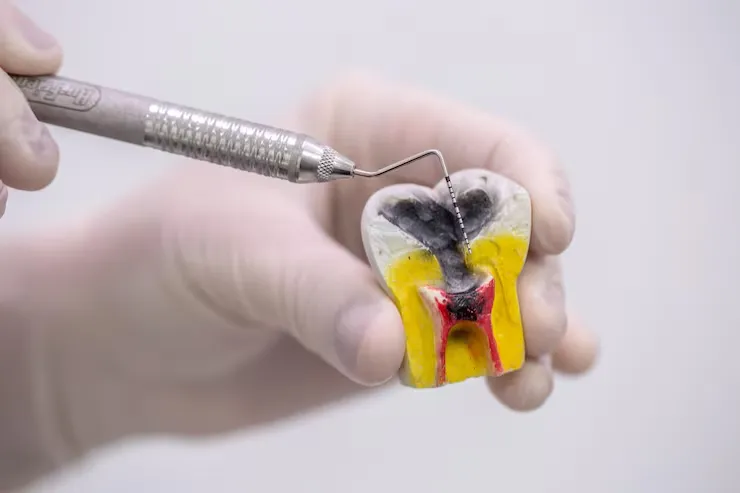
Failed Root Canal Treatment and Tooth Fracture
Teeth that have undergone root canal treatment are more brittle and at higher risk of vertical root fracture. A tooth with a vertical root fracture usually cannot be saved and must be extracted. Similarly, when root canal treatment has failed, and retreatment is not feasible or has a poor prognosis, extraction may be necessary.

Severe Tooth Resorption
Internal or external resorption can progressively destroy the root structure. When resorption is advanced, the tooth cannot be retained predictably and needs to be removed and replaced.
What Happens After a Tooth Is Lost?
The consequences of tooth loss are progressive and cumulative:
Bone resorption begins within weeks
Without a tooth root, the alveolar bone receives less stimulation and starts to resorb. This bone loss is largely irreversible without grafting.
Adjacent teeth drift
Neighbouring teeth gradually tilt into the gap, disrupting natural contact points and alignment.
Opposing teeth over-erupt
The tooth in the opposite jaw, now lacking contact, may erupt further from its socket in an attempt to meet the missing tooth, creating new bite interferences.
Bite change and TMJ stress
Altered tooth positions and bite relationships can lead to TMJ dysfunction, jaw muscle strain, bruxism, and accelerated wear on remaining teeth.
Facial change
Significant bone loss in the back of the jaws and multiple missing teeth can shorten the vertical dimension of the face, contributing to a more collapsed or aged appearance over time.
If you have recently lost a tooth in Bangalore, an assessment in the first few months offers the widest range of simpler, less invasive replacement options.

How We Assess Missing Teeth
At Dental Solutions Clinic in Indiranagar, each case of missing teeth is evaluated comprehensively:
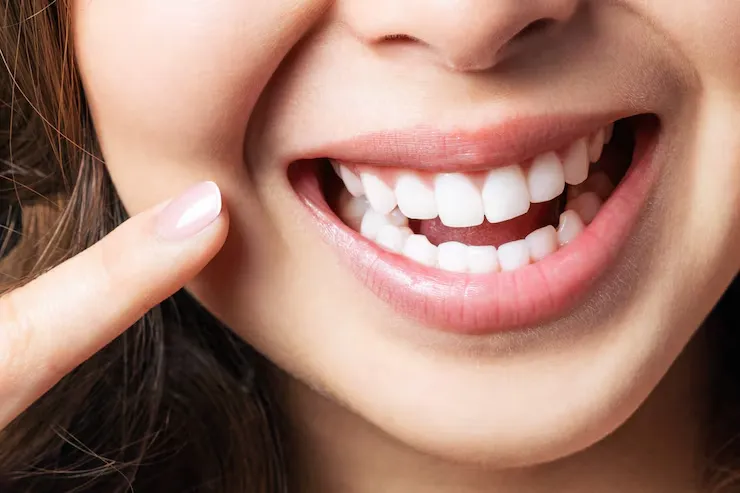
Clinical assessment
We examine the gap, adjacent and opposing teeth, and your bite to understand both the local and overall impact of the missing tooth.
PLANMECA ProMax CBCT (3D scan)
A three-dimensional scan measures bone width, height, and density at the proposed implant site and maps critical structures such as nerves and sinuses.
Periodontal assessment
Any gum disease is identified and treated first. Active periodontitis is a major risk factor for implant failure and must be stabilised before implant placement.
Medical history review
Systemic conditions such as diabetes, osteoporosis, and bisphosphonate therapy are reviewed and coordinated with your physician as needed to ensure safe planning.
Digital treatment simulation
Where Invisalign or orthodontic treatment is part of the plan, a digital simulation shows the proposed tooth positions and final outcome before treatment begins.
How We Replace Missing Teeth

Dental Implants — The Gold Standard
A dental implant replaces both the root and the crown of the missing tooth. A titanium fixture is placed in the jawbone, and after osseointegration (the bone fusing to the implant, usually over 3–6 months), a custom ceramic crown is fitted on top. The result closely mimics a natural tooth in function and appearance. Crucially, the implant stimulates the jawbone and helps prevent the ongoing bone resorption that occurs with other replacement options.
At Dental Solutions Clinic, implant surgery is performed by specialist Periodontist Dr Balasubramanya K V, while the prosthetic crown or bridge is designed and fitted by specialist Prosthodontist Dr Ramya D S. Both hold postgraduate qualifications in laser dentistry from the University of Vienna.

Implant-Supported Bridge — For Multiple Missing Teeth
When two or more adjacent teeth are missing, an implant-supported bridge can replace them using two or more implants to support a fixed bridge of three or more units. This approach avoids grinding down healthy neighbouring teeth and offers excellent stability and chewing function, provided there is adequate bone for the supporting implants.

Conventional Dental Bridge — Where Implants Are Not Possible
A traditional dental bridge uses the adjacent teeth as anchors and supports a false tooth (pontic) in the gap. The anchor teeth must be prepared (reduced) to accept crowns. A bridge restores the visible gap and basic function, but does not prevent bone loss at the missing tooth site and places extra load on the anchor teeth. It is often chosen when bone volume is insufficient for implants or when a patient prefers a non-surgical option.

Removable Partial Denture — For Patients Not Yet Ready for Implants
A removable partial denture replaces one or more missing teeth with a removable appliance retained by clasps on adjacent teeth. It is typically the most affordable solution, but it offers the least natural function and stability, and does not preserve bone at the extraction site. It can be an appropriate transitional option while planning a more permanent solution.

Full-Arch Implant-Supported Prosthesis — For Complete Tooth Loss
For patients who are fully edentulous or about to lose all remaining teeth, a full-arch fixed prosthesis supported by 4–6 implants (such as All-on-4 or All-on-6 concepts) provides stable, non-removable replacement teeth. This approach offers excellent chewing function, stability, and patient satisfaction and is the closest equivalent to a full set of natural teeth.
Frequently Asked Questions
How soon after extraction should I replace a missing tooth?
As soon as possible. Ideally, socket preservation is performed at the time of extraction, with implant placement planned within about 2–4 months where appropriate. Each month without replacement allows further bone resorption and tooth movement, making future implant placement more complex and sometimes more costly. With socket preservation, bone volume is better maintained, and implants can often be placed later without additional grafting.
Can I get an implant years after losing a tooth?
Yes. Even years after tooth loss, implants are often possible. However, the bone that once supported the tooth may have been significantly resorbed. A CBCT assessment will determine whether there is sufficient bone for direct implant placement or if bone grafting is needed first. Both procedures are available at Dental Solutions Clinic. The overall treatment timeline is longer when augmentation is required, but the final outcome can be comparable to placement in native bone.
Are dental implants safe for patients with diabetes?
In many cases, yes — provided diabetes is reasonably well controlled. The main concerns are delayed bone healing and an increased risk of infection. When HbA1c is well managed (typically below about 7.5–8%), implant outcomes can approach those seen in non-diabetic patients, although individual risk still varies. We will request your recent HbA1c, coordinate with your physician where needed, and plan timing and maintenance accordingly.
Does a gap from a missing tooth affect my other teeth?
Yes, and the effects are progressive. Adjacent teeth can tilt into the space, the opposing tooth can over-erupt, and the bone at the gap site continues to resorb. These changes happen gradually and may go unnoticed at first, but they eventually alter the bite and make correction more complex. Replacing a missing tooth early is almost always simpler and more cost-effective than dealing with long-term secondary changes.
What is socket preservation, and do I need it?
Socket preservation is a procedure performed at the time of extraction where bone graft material is placed into the empty socket to support the ridge as it heals. This greatly reduces the amount of bone loss that would otherwise occur in the first year after extraction, when up to 25–50% of ridge width can be lost without intervention. It is strongly recommended for any tooth that may be replaced with an implant in the future, as it helps maintain bone volume and can reduce the need for additional grafting later.